Taylor Hughes · 20 September 2026
User Engagement Dynamics in Peer-Voted Knowledge Networks During High-Traffic Periods
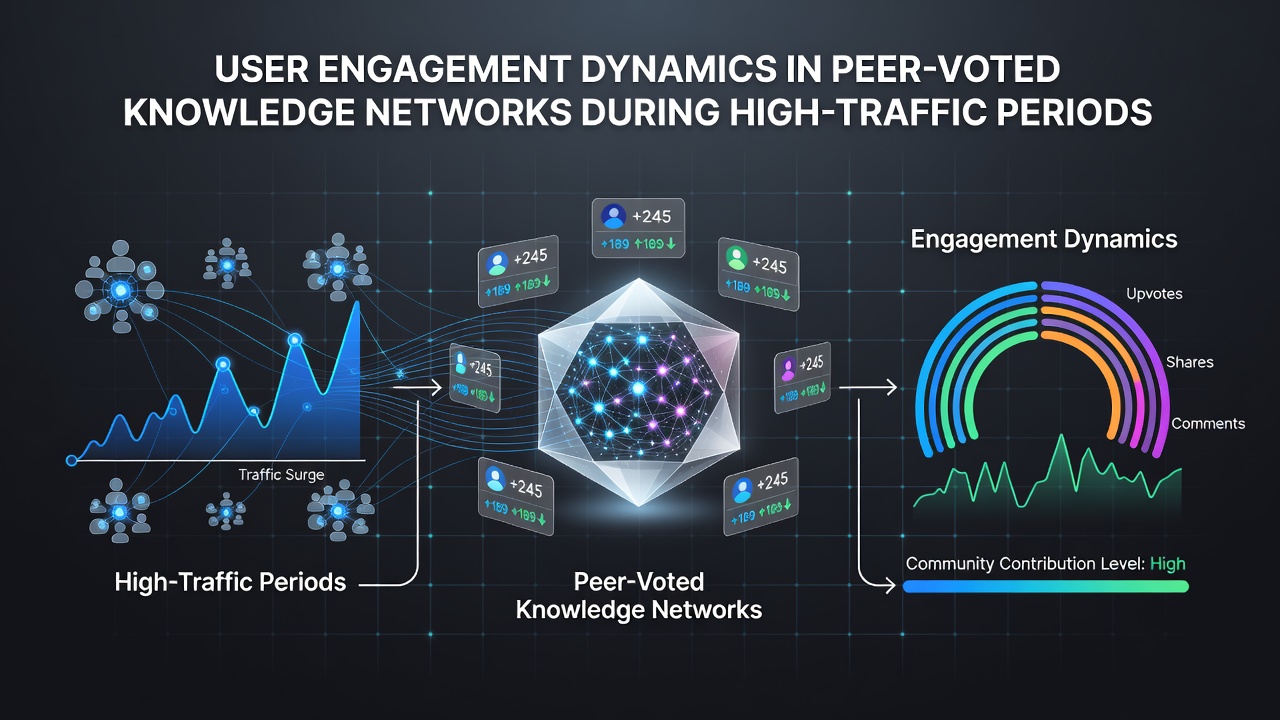
Peer-voted knowledge networks operate through mechanisms where community members cast votes on questions and answers, and these votes shape content visibility across platforms such as question-and-answer sites and discussion forums. Researchers have documented how engagement surges when traffic volumes increase, often due to external events or scheduled releases, leading to shifts in voting frequency and comment volume. Data from multiple platforms indicate that during these periods, new users arrive in larger numbers while established contributors adjust their participation rates to match the pace.
Core Mechanisms of Peer Voting Systems
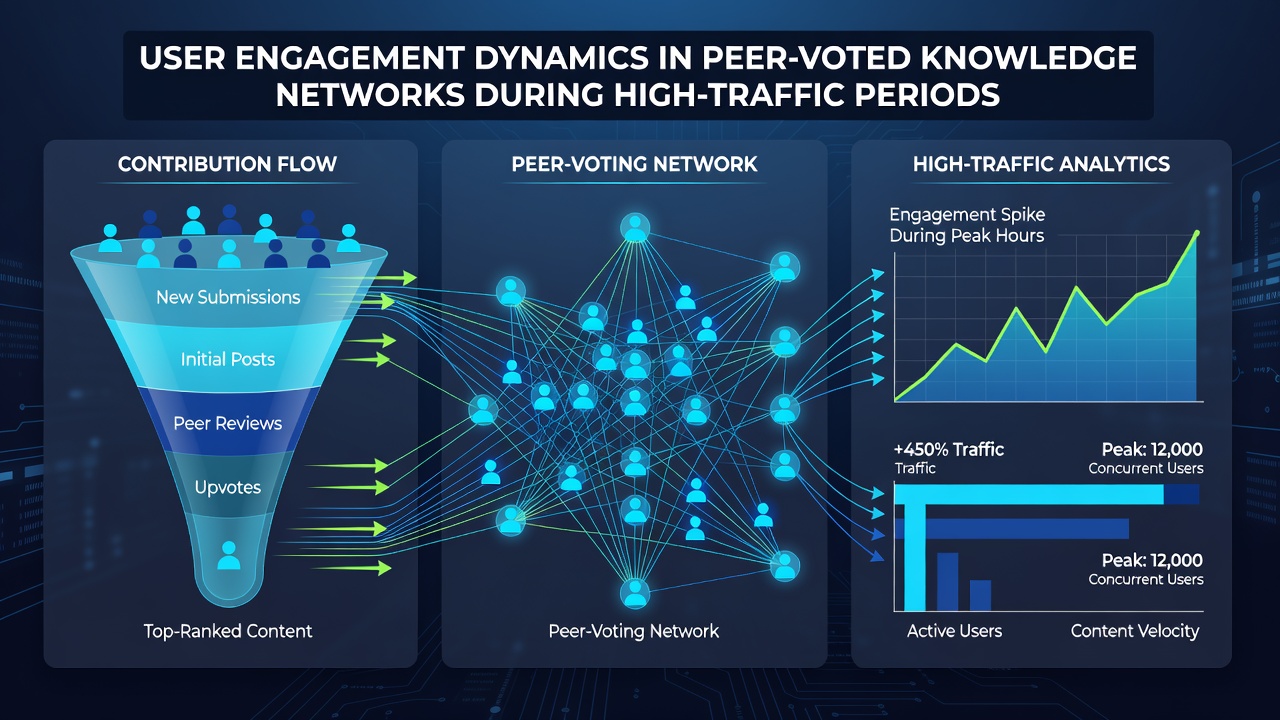
Platforms rely on algorithms that weigh upvotes and downvotes to rank responses, and studies from academic institutions show that high-traffic intervals accelerate this ranking process because more votes accumulate within shorter time frames. One analysis of discussion threads revealed that answers receiving early positive votes tend to attract additional support at faster rates when overall site activity rises. Observers note that users often scan front pages more frequently during these windows, which increases the chance that highly voted items receive sustained attention while lower-ranked contributions fade.
Traffic spikes also affect moderation queues, because reported content and new submissions both climb, prompting platforms to deploy additional automated filters. Figures from network traffic reports demonstrate that moderation response times shorten when volunteer moderators log in at higher rates during peak hours. This interaction between automated systems and human oversight creates a feedback loop where engagement metrics influence both content promotion and removal decisions.
Behavioral Patterns Observed in High-Traffic Windows
Users who participate regularly display distinct patterns once traffic intensifies, including shorter dwell times per post and higher rates of quick voting without extensive reading. Research conducted across several specialized forums indicates that repeat contributors focus on topics aligned with breaking developments, whereas casual visitors tend to engage with trending threads that appear on discovery pages. These behaviors produce measurable changes in answer quality distribution, because rapid voting favors concise responses that address immediate questions over detailed explanations that require more time to evaluate.
What's interesting is how notification systems amplify these effects, since alerts about new answers or comments draw users back into active threads at intervals that align with traffic peaks. Platform logs from September 2026 showed increased click-through rates from mobile notifications during evening hours in multiple time zones, correlating with global news cycles that drove additional visitors. Consequently, the volume of replies per question rose, yet the proportion of replies that received votes remained relatively stable according to aggregated platform data.
Algorithmic Adjustments and Platform Responses
Site operators implement temporary adjustments to ranking formulas during high-traffic periods to prevent older content from being buried too quickly by incoming votes. Documentation from engineering teams at major networks describes how decay factors receive recalibration so that questions posted hours earlier retain visibility longer when new submissions flood the system. Evidence from usage statistics suggests these tweaks help maintain balanced exposure across both established and emerging contributions.
External sources provide context on broader digital participation trends that intersect with these platform-specific changes. According to a report published by the Pew Research Center, online community activity levels increased notably during periods of heightened public interest in specific topics. Similarly, findings released by researchers at the OECD highlight how information-sharing sites experience concentrated user sessions that coincide with international events, affecting both vote distribution and content freshness metrics.
Those who've examined longitudinal data note that platforms sometimes introduce rate limits on new posts or votes to manage server load, and these controls influence how quickly engagement can scale. In practice, such measures create brief pauses that allow existing votes to settle before additional activity resumes, thereby preserving some stability in ranking outcomes even as overall traffic remains elevated.
Impact on Content Diversity and User Retention
High-traffic intervals bring a wider range of perspectives into comment sections and answer threads, yet researchers have observed that certain viewpoints receive disproportionate support when voting accelerates. Data collected from peer-voted sites indicate that contributions from accounts with established reputation scores maintain an advantage, because their prior visibility helps new posts gain initial traction more readily. This dynamic can lead to reinforcement of existing contributor prominence during busy periods.
Retention metrics show mixed results after traffic surges subside, because some new participants continue engaging while others depart once immediate interest wanes. Platform analytics reveal that users who cast at least one vote during a high-traffic window demonstrate higher return rates in the following weeks compared with those who only viewed content passively. Such patterns suggest that active participation, even at modest levels, correlates with continued involvement in the network.
Conclusion
Peer-voted knowledge networks exhibit measurable changes in engagement dynamics when traffic volumes rise, affecting voting speed, content ranking, and user behavior across multiple dimensions. Research indicates that algorithmic responses and notification systems play significant roles in shaping these outcomes, while external data sources confirm that broader digital trends align with platform-specific activity spikes. Continued observation of these patterns provides insight into how such networks function under varying load conditions without requiring subjective interpretation of the underlying processes.